

Heads up: Today is my birthday, and The Dignity of Dependence (and any other book from Notre Dame Press) is 40% off right now till August 15 with the code “NDPSUM26.” (Probably unrelated).
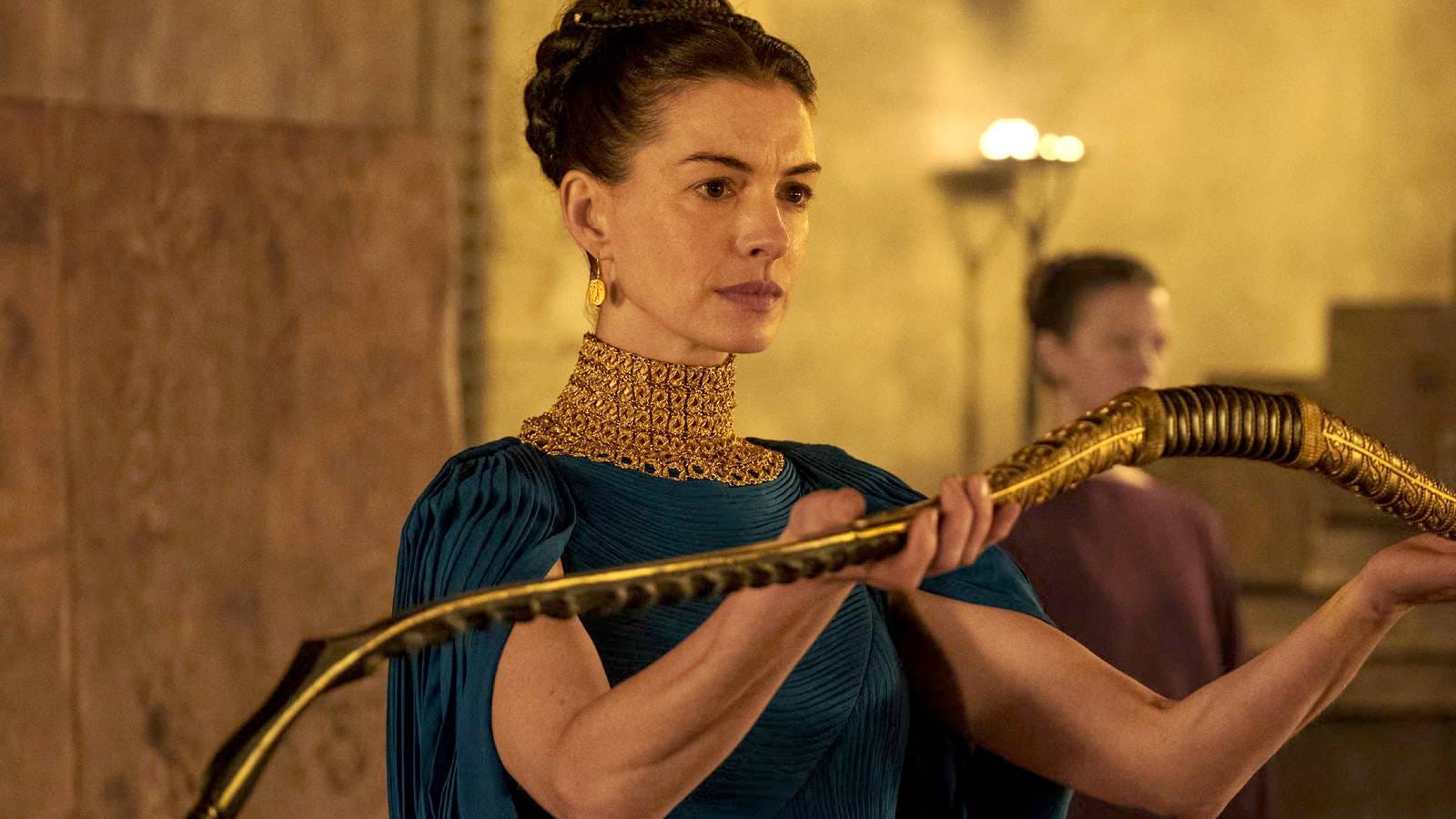
I got to see The Odyssey last week and really enjoyed it on net. I said going in that I wanted the bow-stringing to be as thrilling as it was the first time I ever saw it adapted—which was as a kid watching Wishbone—and BOY did I get my wish.
Feel free to treat the comments as an open thread; it’s a movie that rewards kibitzing. I have some grudges I’m holding (the BED!), but part of why I liked seeing the movie and chatting with people after is because Nolan is earnestly trying to retell the story. There are distortions, but they make the movie a double portrait of Odysseus, and what made Nolan decide this is what he wanted to spend years of his life struggling with. The movie feels like Jacob wrestling with an angel, asking it to bless him.
If you view it, as I did, in the way you would a Shakespeare staging at your local theater, you see people telling the story again because they love it. Not every choice is perfect, but the stakes are low—you know the story is immortal and people will keep telling and re-telling it.
Which brings me to…
Today’s post exists primarily as a PSA. I wanted to make sure that everyone knows that Hadestown, one of the best musicals of the last decade, is coming to movie theaters for just one week. They taped the original Broadway cast (spectacular!) and the proshot is coming to movie theaters.
This is going to be our two big kids’ first trip to a movie theater. And I’m asking you to trust me on this one and check if it’s playing near you.
Hadestown is the story of Orpheus and Eurydice. The trailer is here, and will give you a good sense of the music and mood:
I love this show, and I got to cover it years ago for The American Interest.
A story of gods and men requires magic, and the show achieves its moments of transcendence by hanging onto a scrappy, small-budget sensibility, with an admirable restraint that is sometimes lacking in Broadway transfers. In “Wedding Song,” for instance, when Eurydice is won over by Orpheus’s courtship, his singing animates the set. There’s no wirework (which must be a relief to the actor playing Orpheus, Reeve Carney, previously star of the perilous Spider-Man: Turn Off the Dark). Instead, the five-person chorus moves tables and hoists chairs, giving shape to Orpheus’s promise that, despite his poverty, “The trees are gonna lay the wedding table.”
In another show, this might be part of the heightened tone of theater, unremarkable as the act of singing is in musicals. Orpheus seems to experience it that way, but Eurydice (Eva Noblezada) clearly experiences it as diegetic action. She turns in confusion to see the usually invisible extras and takes in Orpheus with new eyes. There is a real magic to his song, and the cynical Eurydice, focused purely on survival, begins to consider there might be something more to the world…
Hades tempted Eurydice into death by offering her Lethe’s oblivion as a solution to the difficulties of life. The residents of Hadestown recite his promises in “Chant II:” “He said he’d shelter us. He said he’d harbor me.” The gods have forgotten who they are, too. In Hadestown the goodness of being is a truth we have trouble remembering, a song we lose the beat of.
Trust me on this one.
Wishbone!!
Happy birthday Leah! Wishing you a restful and celebratory day (a very difficult combination to pull off for moms of little ones!)
With respect to the Odyssey, I really enjoyed it but I thought it was a very (for lack of a better word) godless telling. Zeus was invoked frequently but never shown, Poseidon was infrequently mentioned, Calypso was not portrayed as particularly powerful, and Athena seemed kind of like a hovering guardian angel rather than the relentless immortal advocate for Odysseus that she is in the poem (and if anyone wants to talk about that Athena/sack of Troy double image with me, I would very much like to hear your takes! My husband and I talked A LOT about that artistic choice on the drive home!) The only immortal that seemed at all powerful was Circe! I did like the bow-stringing bit though, and I thought the ending was particularly well done. Regret seems like a particularly un-heroic emotion in this version of the ancient world, and the fact that Odysseus came to regret some of his choices was fascinating to me, and tied the whole thing together in a way that I wasn't really expecting. I look forward to hearing thoughts from others, it is definitely a movie that rewards kibitzing!