

Two logistical notes: I’ve put the first round of stickers and magnets in the mail, and I’m going back to the post office for round two this week. If you’re buying The Dignity of Dependence or any of my other books (including my “Scouring of the Shire” rpg) for someone, sign up here to get a magnet/sticker sent to you as part of my Mother’s Day (not exclusively for moms) promotion.
Second, I’m doing a hybrid book club on The Dignity of Dependence with Feminists Choosing Life of New York on May 13th. You can attend in person in Rochester, NY, or virtually from anywhere (I’ll be beaming in). Registration link is here.
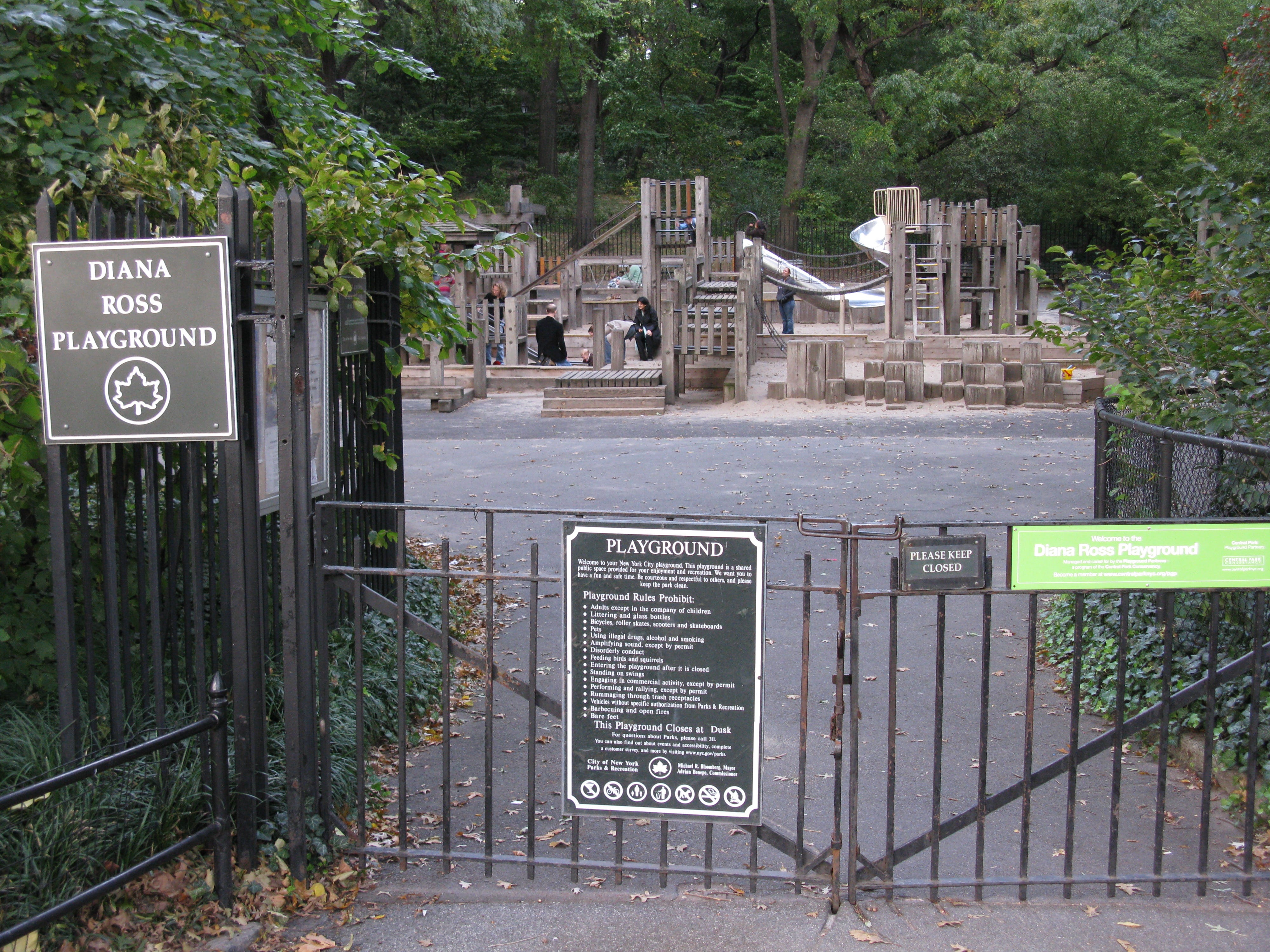

A trio of my favorite thinkers on policy, hospitality, and the built environment have had good pieces lately. First up, a team up between Patrick T Brown and Elliot Haspel for Capita: “Hospitable by Design: Toward Institutions and Communities That Welcome Families.” Here are some of their recommendations that you can advocate for at the local level:
Create a flat family pricing structure at museums and theaters where families do not have to pay a per-child fee. Not only did this garner strong support in the poll, but 61% of respondents also said they would be “very” or “somewhat” willing to see taxes raised to pay for it.*
Invest more in public libraries, public pools, and public splash pads to extend their hours and in the maintenance and safety of public parks.*
Improve walkability and “strollerability” in neighborhoods by prioritizing sidewalk repair and curb cuts in areas with many families and adding sidewalks where there are gaps.
Adopt “slow streets” near schools and child care programs that limit vehicles’ speed and idling, if not entirely closing them off from through traffic during school hours.
Use planning and community development mechanisms to encourage co-locating family and children’s services (as well as elder care services) or “care blocks” that centralize services such as child care, laundromats, legal aid for women, and so on.
I am very very pro making public parks family friendly “third places” and it’s easy to miss cheap, critical features that make them family friendly. My neighborhood overhauled our “Tot Lot” which is especially well suited to preschoolers and… removed the latchable gate, despite protest from parents.
Now kids who have runners can dart directly into the street, whereas before the renovation, there was a point where toddlers would be stymied. It’s a lot harder for families with multiple kids to enjoy the park now, while parents with just one kid have the (bad) option to hover.
Now, this one, I like in theory, but I am very very skeptical of in practice.
This can start from the top, in the form of documents and procedures aimed at cultivating more family-friendly environments. For instance, a state or city office might request a “family impact statement,” similar to an environmental impact statement, that assesses proposed rules or policy changes by how they might make it easier or harder for families to flourish or find community. A new government service or program might have the best of intentions, but if it is not implemented with an eye towards how parents with young children will actually apply for, navigate, and use the program, it will fail to achieve its desired ends.
I just cannot look at NEPA and other “write more reports” roadblocks and feel enthusiastic about adding one more speedbump, even when it’s aligned with my goals. I know Patrick and Elliot probably mean this kind of regulation to catch problems like the one I describe above, but, to be honest, I think I want to try to address it mainly through electing family-friendly politicians, and not with a new set of regs.
(Our city’s facebook page included complaints about seeing too many kids in parochial school uniforms in the Tot Lot after school, indicating to those community members that the school was ?hogging? the park). Sigh.
Elsewhere at Comment, Sara Hendren has a lovely piece titled “Pattern Recognition.” (Sara’s spectacular book, What Can a Body Do? How We Meet the Built World, is one of the most influential on The Dignity of Dependence.) She begins with a consideration of the sideshow incubates and builds out from there:
You can see the foundling wheel’s long tail of influence—a kind of loose, dotted-line design heritage—in its contemporary counterparts. As with so many charitable structures eventually subsumed under welfare–state management in the United States, the baby box now is built into the sides of fire stations, with a “no questions asked” proviso and high-tech warming features. In some parts of the world, rescue services are still run by charitable organizations: Door of Hope in Johannesburg has received nearly two thousand babies in its quarter century of operation. Their “door” is also a small hatch built into the side of a building structure, but their services extend beyond infancy to young children—facilitating adoptions, family reunification, and early childhood services.
Another kind of box design helps families get strong material starts in their own homes: The Finnish baby box, recently replicated in New York City, gives parents a box full of supplies like diapers and onesies. A small bundle of caregiving equipment for the smallest humans, given in a spirit of collective responsibility.
It can be hard to fully appreciate this kind of design for the astonishing, radical statement in its provision: that the babies of strangers carry the kind of dignity that is tantamount to those of close kin and tribe. It’s an idea that had to be invented, that goes against the self-preserving optimization of communities adapted for fitness. This kind of dignity makes claims on a collective, perhaps a polity. “Design for dignity” is easy to affirm at the high level of uncontroversial principles, but in practice it too often takes on the straightforward structure of unidirectional charity, as though dignity were a good or service extended from those who somehow “have” it to those who somehow lack it. A sharper term from theologian Helmut Thielicke might get us closer to what’s true: Dignity is not a possession to be more fairly meted out but a universally contingent relational force—a bracing state of human dependency on divine sustenance, a vitality on which each human life hangs every second.
I am really hoping Sara has a second book in progress. In the meantime, it seems like a good time to mention that I keep a very casual “Other Feminisms” wishlist of books that seem germane to our ongoing conversation. I do not promise that if someone sends me a book, I will get to it in a timely way, but I will make an exception for lost in space: Architecture and Dementia, which has been in and out of print, if anyone sends it my way.
I’ve really enjoyed discussions of the built environment at Gallaudet, the university built for Deaf students, where the wide halls and rounded corners are meant to make it easy to carry on a visual conversation in ASL, walking in large knots of students.
At our public library, there is a bathroom near the kids play area that has a regular size toilet and a small toilet. I love this. But, it has an automatic flusher! Anyone who has taken a kid to a bathroom with an automatic flusher knows... these do not pair well.
It’s such a relief anytime we encounter public restrooms that are fully accessible to adults and children of all ages-I.e., changing tables, stall partitions to the floor or baby seats on the walls, quiet flushers and dryers, step-stools, stalls large enough to comfortably fit multiple people or pregnant women and fully operate the door, hooks!, waste bins in the stalls, sinks & mirrors at kid height or more step stools, automatic doors, etc. So many places have one or two of these features that don’t account for universal needs.
To our frustration, we’ve seen many many places that now limit “family pricing” to 2 adults & 2 children, requiring full charge for each additional person. Our local children’s museum charges full admission (not cheap) for any child over 1. Similarly, library museum passes have many more restrictions that seem to defeat their purpose.