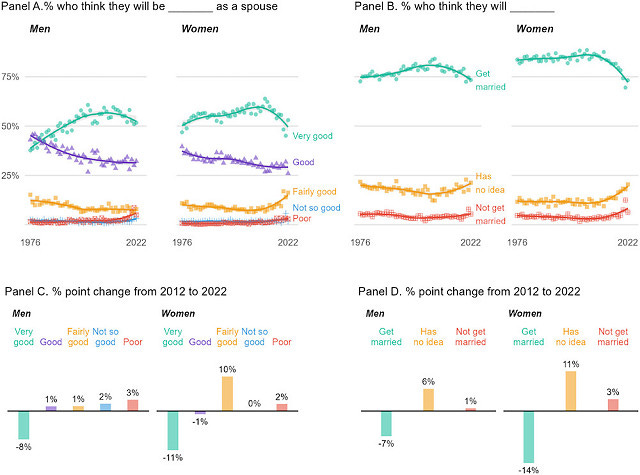
Holding a stable job and being able to provide for one’s family is part of what it means to be a good spouse, but it flows out of bigger questions of character and how one handles responsibility. If we want to see marriages rebound, it isn’t enough to focus on expanding blue-collar work. High-school seniors need to have more faith they can handle the duties of marriage and child-rearing. Giving them more lectures on how important marriage is won’t do it—they think so highly of the institution that they judge themselves incapable of living up to it. Kids need more time away from adult supervision, pursuing projects of their own design, with the freedom to fail and to learn.
I’ve also seen friends argue that if you’d like people to match and marry earlier, you need different signals of potential/responsibility/etc than pulling in big wages, since your potential spouse will be earlier in his career.
Back in November, I got to speak at the de Nicola Center Fall Conference. It’s always a highlight of the year when I get to go. This time, the theme was “‘That which I Also Received’: Living Tradition” and my talk was titled: Known by Our Need: Images of Maternity as a Guide to God’s Love.
If you’re one of the people who wished that The Dignity of Dependencewas more explicitly Christian, instead of being part of Notre Dame’s series on “Catholic Ideas for a Secular World,” then this is the missing chapter of the book.
My talk starts at 20:16, and the other two talks include Kelly Anderson explaining why Jael is a type of the Ark of the Covenant and Abigail Jorgensen on “woundability.”
I would say strong signs of marriageability 1) a person who has good friends who are other-oriented, are excited about having kids (or at least not afraid of children), and who are taking on responsibility in their own lives, 2) a person who does what they say they will do, or is honest when they haven't done that, 3) a person who can apologize, 4) a person who pursues delayed gratification (showing discipline) in some area of their life. 5) a sense of humor and joy in challenge (bonus if their family shares this strength), and lastly, 6) someone who thinks critically about their own values and isn't afraid to disagree respectfully with people they are close to.
Others have responded by talking about what a marriageable man has, so I’ll add what I’ve learned about the vices I need to lack.
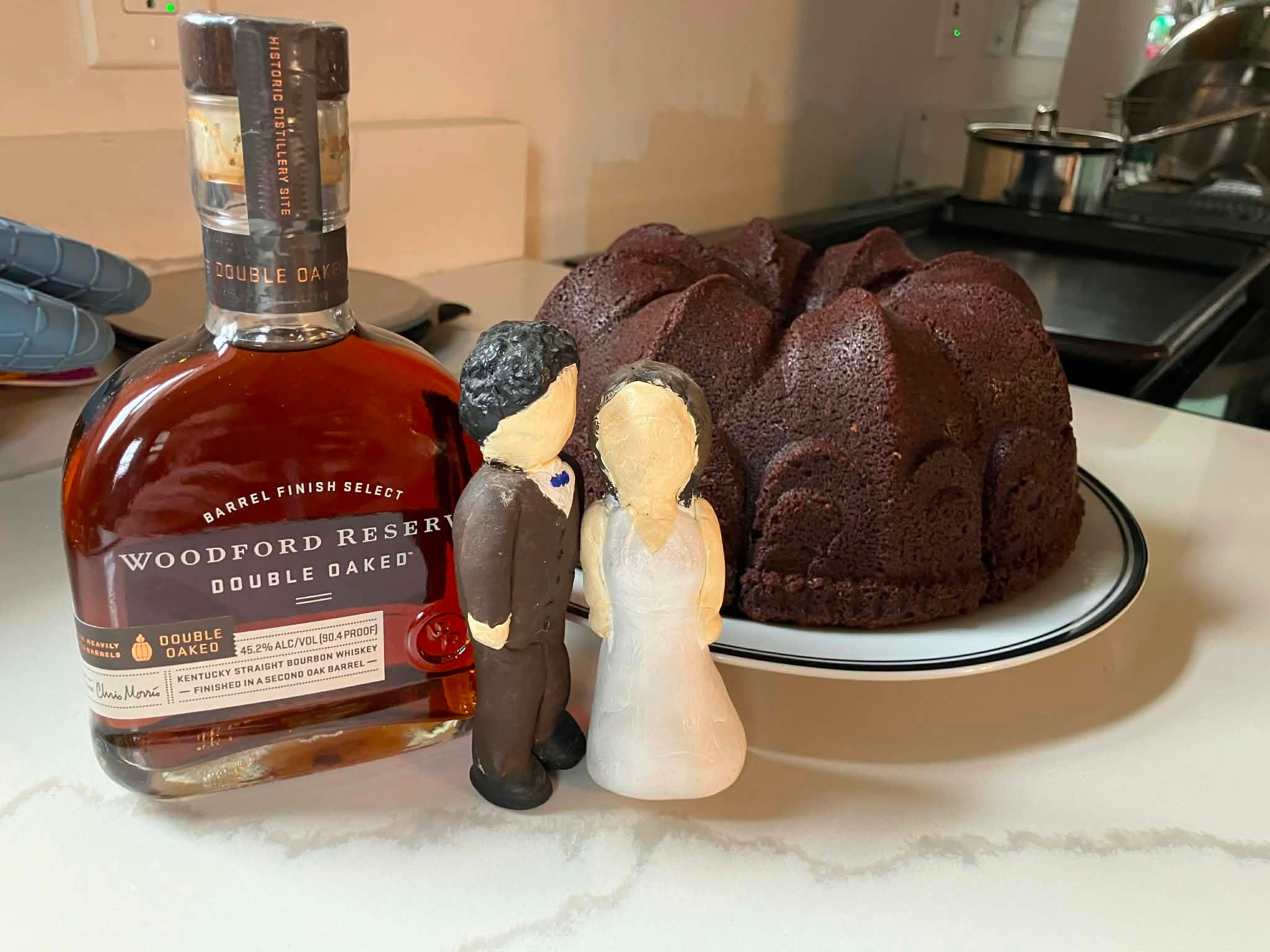
The image above includes a picture of Woodford Reserve. Once upon a time, I drank my body weight in that stuff. Slowly, I came to learn my biggest impediment to showing up as a husband and father was my relationship with appetite-based vices. If I want to be a good husband and father, I must strive to be a man of virtue. And in my experience, for men like me, the first virtue we need to pursue is temperance. If I’m intemperate, I’m not really practicing the selflessness and cheerful service that’s at the heart of being a husband and father.
Equally important, I needed to work on the vice of wrath. I am the biggest, strongest person in my house. I can either be my family’s single largest source of fear or calm, and it’s 100% on me which it’s going to be. I’ve had to learn the difference between primary anger – the uncontrollable response akin to pulling a hand away from a hot stove – and secondary anger. Secondary anger is the chosen, persisting anger that constitutes wrathfulness, and as far as I can tell, there is basically no place for secondary anger in my roles as a husband and father. CS Lewis would decry me for changing the definition of “gentleman” from its original meaning to “a gentle man,” but that’s exactly what I need to be in nearly all circumstances.


I would say strong signs of marriageability 1) a person who has good friends who are other-oriented, are excited about having kids (or at least not afraid of children), and who are taking on responsibility in their own lives, 2) a person who does what they say they will do, or is honest when they haven't done that, 3) a person who can apologize, 4) a person who pursues delayed gratification (showing discipline) in some area of their life. 5) a sense of humor and joy in challenge (bonus if their family shares this strength), and lastly, 6) someone who thinks critically about their own values and isn't afraid to disagree respectfully with people they are close to.
Others have responded by talking about what a marriageable man has, so I’ll add what I’ve learned about the vices I need to lack.
The image above includes a picture of Woodford Reserve. Once upon a time, I drank my body weight in that stuff. Slowly, I came to learn my biggest impediment to showing up as a husband and father was my relationship with appetite-based vices. If I want to be a good husband and father, I must strive to be a man of virtue. And in my experience, for men like me, the first virtue we need to pursue is temperance. If I’m intemperate, I’m not really practicing the selflessness and cheerful service that’s at the heart of being a husband and father.
Equally important, I needed to work on the vice of wrath. I am the biggest, strongest person in my house. I can either be my family’s single largest source of fear or calm, and it’s 100% on me which it’s going to be. I’ve had to learn the difference between primary anger – the uncontrollable response akin to pulling a hand away from a hot stove – and secondary anger. Secondary anger is the chosen, persisting anger that constitutes wrathfulness, and as far as I can tell, there is basically no place for secondary anger in my roles as a husband and father. CS Lewis would decry me for changing the definition of “gentleman” from its original meaning to “a gentle man,” but that’s exactly what I need to be in nearly all circumstances.